
Silicon Sands
A digital sustainability assessment by P2Zero & Posetiv Cloud for Blackpool Council assessing "cost and carbon" for existing and proposed data centres.
"P2zero, Posetiv Cloud and Computacenter have been extremely helpful in supporting Blackpool Council’s exploration of future digital infrastructure. They have helped us better understand the strategic value of operating our own infrastructure, giving us greater control over our data, our carbon footprint and our long-term operating costs. Their expertise and collaborative approach have made a valuable contribution to our thinking as we shape our future digital strategy.” Tony Doyle, Head of ICT Services, Blackpool Council
Background
As part of its of its ICT and investment strategy Blackpool Council is developing Silicon Sands, a locally owned, lower-carbon alternative to hyperscale cloud for public-sector workloads, anchored by a new Exemplar data centre. The Council already held detailed operational data on its data centre estate. To support the investment case it commissioned an independent assessment to bring that data together into a measured account of cost, energy and carbon.
The Project
The project covered the Council's four data centre environments, based on detailed information gathering, modelling an always-on AI workload across six locations, Data gathering included a 57-question structure covering metering, cooling and water, refrigerants, asset condition, cost, capacity, workloads, the Exemplar specification and governance. The results were explored and refined in a series or workshops with the Council team.
The Results
The study found the Council's own sites markedly cheaper and lower carbon than an equivalent public cloud service. The report also set out a staged plan of energy and cost measures, several of which the Council was able to act on straight away. As an additional benefit the findings also informed the environmental performance measures now built into the Exemplar concession., giving the Council measurable terms from the outset.

Greening UK Government
A project for Defra led by P2Zero with Circularity First and Posetiv Cloud to improve the quality of UK government digital sustainability reporting.
“P2zero continue to be a partner in our work on sustainable IT - as one of the central members of the Government Digital Sustainability Alliance they support wider Government work on the issue. Their leadership of GDSA working groups has provided valuable insight into how to footprint complex digital estates, recognising the importance of baselining & reporting. We look forward to working in collaboration with them as they continue this journey”.
Anna Fountain (Defra) Sustainability Lead, Digital Sustainability Team
Background
With responsibility for Greening Government Commitments for ICT, Defra annually compiles data across government departments relating to a wide range of devices (e.g. desktops, laptops, monitors, smart phones, printers etc.) in order to calculate average Scope 2 and 3 emissions. These calculations are used by Defra in the annual UK Government ICT Carbon Footprint reporting previously referred to as STAR (Sustainable Technology Advice & Reporting).
The Project
P2zero analysed the government's report figures by category for annual device energy consumption, scope 2 emissions (from energy use), scope 3 emissions (from manufacturing, packaging, transport and end of life) for over 4 million devices across 34 categories. These figures were compared with industry averages and also with the product emissions data (PCF / LCA) for the some of the typical devices actually purchased and used by government.
The Results
The study found that while previous report metrics were in line with average industry figures, using average device emissions rather than figures for the actual devices in use was likely to cause a significant over-reporting of ICT emissions across government. P2zero undertook a study to identify the most commonly used devices in each category, then worked with Circularity First and Posetiv Cloud to supply Defra with device specific emissions reports.

Sustainability for Imperial
A P2zero project for Imperial to profile the carbon footprint of EUC devices and printers and model the impact of new sustainability strategies.
"Strategic partnerships at Imperial are key to delivering change and the partnership with P2zero helps us to ensure that ICT is fully engaged with the sustainability strategy. We now have the data to put a carbon footprint figure against the devices we provide to our staff and students, as well as getting a better understanding of the impact of our refresh cycles. P2zero have helped us model the potential savings from some of our sustainability initiatives and express them in easy to understand terms to help drive engagement.”
Neil Hanham, Head of Digital Workplace & ICT Sustainability Lead
Background
Imperial is one of the world’s most prestigious universities, ranked 2nd overall in the QS world university rankings. The university has a new ten-year strategy which places sustainability at its core and sets out the plans to be Net Zero by 2040. Imperial aims to make its university campuses one of the lowest carbon, zero polluting, low consumption and biodiverse ecosystems within the constraints of its urban environments, combining academic strength with a commitment to safeguarding the future.
The Project
Imperial engaged sustainability specialists P2zero to evaluate the carbon footprint of nearly 30,000 end user computing (EUC) devices and printers. The project looked in detail at all the makes and models of EUC devices and printers in use at Imperial to create scope 2 (energy use) and scope 3 (embodied carbon) benchmarks. P2zero also compared the carbon footprint figures with anonymised data from other customers so that the university could see how its carbon footprint compared.
The Results
The results indicated that the annual energy consumption of the EUC devices and printers at Imperial is responsible for producing over 188 metric tonnes of CO2e each year. To put that in perspective, it is the equivalent of every student at the university travelling the full length of the London Underground each year. The data will help the university to include EUC and printing strategies as part of their drive to reduce emissions through the overall Carbon Reduction Plan.

Device Data for NAtWEST
A P2zero project for NatWest to evaluate the carbon footprint of EUC devices and model the impact of location and refresh strategies.
"We’ve benefitted from the knowledge of the team at P2zero® over the last few years. With the increased focus on sustainability and carbon reduction, the knowledge and information that P2zero has provided us has taken our understanding to a new level and allows us to make much more informed decisions around vendor and device choices that cover the entire lifecycle of the device from manufacture to recycling. The team at P2zero are industry leaders in their field and a pleasure to work with."
Mike Webster, Head of Colleague Platforms, NatWest
Background
In 2025 NatWest Group reviewed its climate ambitions and wider environmental and social policies, refining the climate transition plan to focus on the areas where the Group can deliver the greatest influence. Having completed the review, the Group's focus is on the most material activities across a range of sectors, with the ambition to at least halve the climate impact of financing activity by 2030 (against a 2019 baseline) working towards a long-term 2050 net-zero ambition.
The Project
In partnership with Computacenter P2zero undertook a series of studies to examine the digital sustainability of existing and proposed EUC devices. This included looking in detail at the wider issues (not just carbon, but also use of recycled materials, ESG commitments, waste, water and energy use). The studies also considered location (where the devices would be used) and the implications of potential use cases and configurations (e.g. using one large display vs two smaller ones).
The Results
The results gave NatWest sustainability metrics to include in a "weighted scorecard" approach to decision making about their EUC service. Crucially, while this includes the carbon metrics at a detailed product (model and configuration) level, it also included wider digital sustainability metrics. As the customer commented: "Historically, we looked at industry certifications such as EPEAT Gold and relying on the fact that every generation of device became more power efficient, we didn’t delve much deeper."
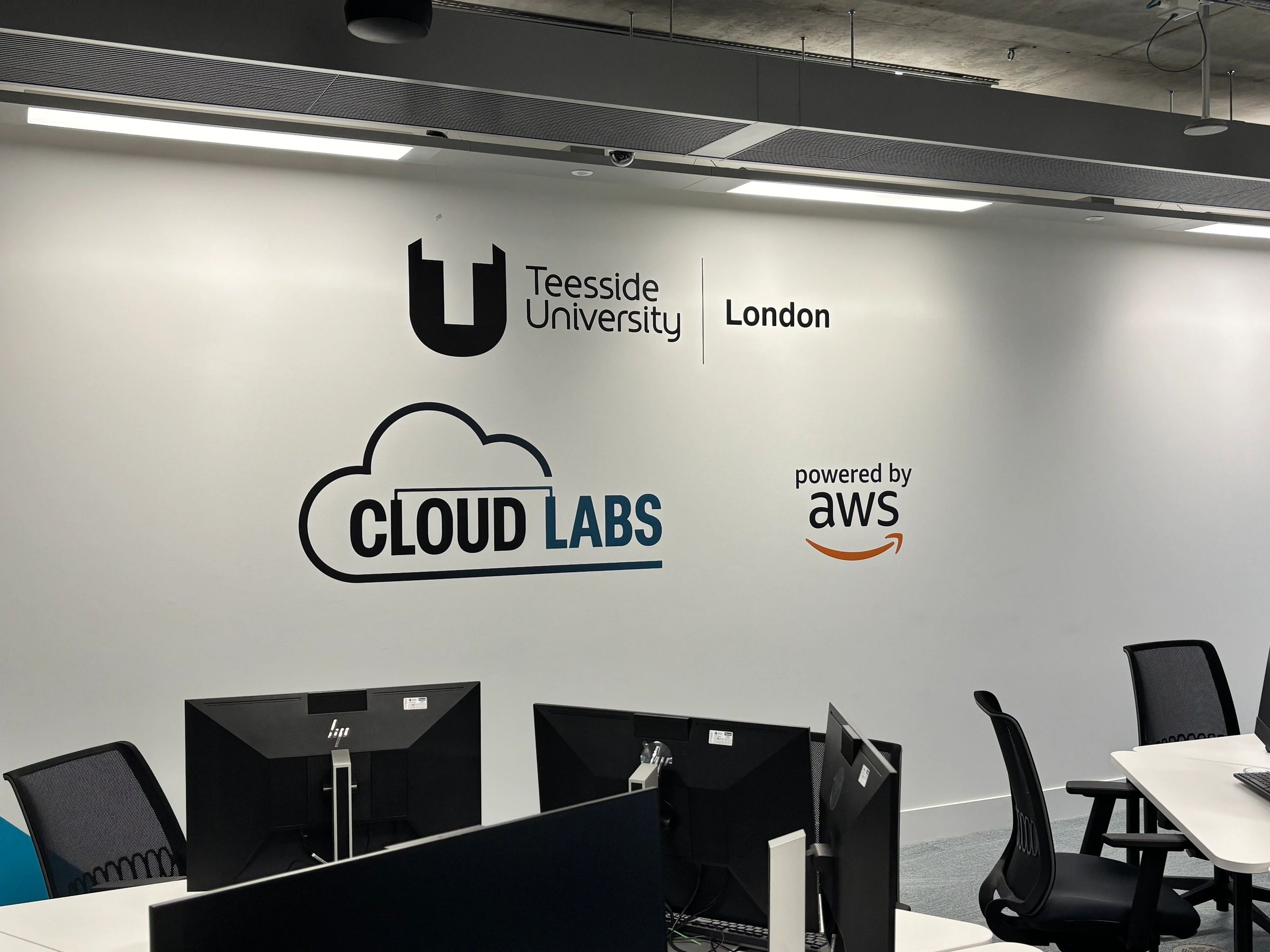
Cloud Labs at Teesside
A P2zero project for Teesside University to evaluate the sustainability of application streaming to London and Teesside campus locations.
"P2zero gave us valuable insights into the outliers and practices of parts of our hardware estate, of which we were simply not aware. They also did a careful deep dive with our cloud service providers and provided much-needed steers on industry good practice in the interpretation of usage data. P2zero were a pleasure to work with, and this valuable analysis will enable us to inform and progress the sustainability and environmental agendas at Teesside."
Paul Dalkin, Head of IT Device Services, IT & Digital Services, Teesside University
Background
Teesside is an award-winning University with campuses in both the Tees Valley Teesside and London. For the ICT provision to the labs at the London Campus the University decided to use Amazon Workspaces Applications which allows software to be streamed from the Cloud to any device over an internet connection. Having proven that the solution worked well in practice, the University was keen to ensure that the solution was also in line with their sustainability goals before considering any wider use,
The Project
To complete the study P2zero evaluated the financial cost and carbon footprint of devices in each scenario (physical and cloud lab deployment). This included data on usage of the Cloud Labs service over the year and detailed analysis of workloads during a sample week, combined with outputs from carbon footprint analysis and modelling tools. This included analysing the costs of purchasing AWS services versus the costs of buying and managing an estate of physical workstations
The Results
The study found the AWS solution offered a 78% saving on scope 2 emissions (University energy use) and 25% on scope 3 emissions (from supply chain energy use and device embodied carbon) plus an annual cost saving (covering devices and energy use) of 28%. Regarding the process and methodology, the customer commented: "Their analysis and attention to detail is both robust and fiercely objective – and their transparency was demonstrated by the inclusion of the Carbon footprint of the project itself in the report!"

Carbon Reduction Plan
A P2zero project for specialist IT company Academia to establish their baseline carbon footprint and create a measurable carbon reduction plan.
"After a detailed market review of sustainability consultants Academia engaged P2zero to support the Group’s Senior Management Team (SMT) identifying, categorising and analysing our baseline CO2e emissions. Ewen’s considerable IT sector knowledge meant he immediately added value and quickly completed a data analysis documenting the Group’s current emissions including our top-tier supply chain. Working with our SMT P2zero's next task was to draw up an action plan with priorities and measurable reduction targets."
Caroline Ley, Head of Bids and Tenders, Academia
Background
Academia is an award-winning technology solutions provider, supplying hardware, software and services to a range of public and private sector customers. As well as meeting their own ESG and sustainability commitments, Academia needs to comply with sustainability clauses in procurement standards set by the Government Commercial Agency (formerly CCS). These include measuring carbon emissions annually and tracking progress against a net zero plan with at least a 2050 deadline.
The Project
P2zero worked with the Academia team to examine a wide range of data, including premises energy, supply chain, commuting, business travel, waste and (in a later phase) upstream and downstream distribution, These figures were converted into carbon emissions classified as Scope 1, 2 and 3 under the GHG Accounting Protocol. Based on the figures, P2zero worked with the Academia SMT to draw up a short, medium and long-term carbon reduction plan which was approved by the Academia board.
The Results
The project delivered a baseline to enable Academia to measure the impact of the newly created carbon reduction plan. All documents were created to meet the standards required for public sector procurement. Regarding the engagement the customer commented: "As a business who actively strives to align with the sustainability goals of our customers, being able to call on Ewen and P2zero’s expertise has been incredibly beneficial as we continue to grow and diversify our service portfolio."